
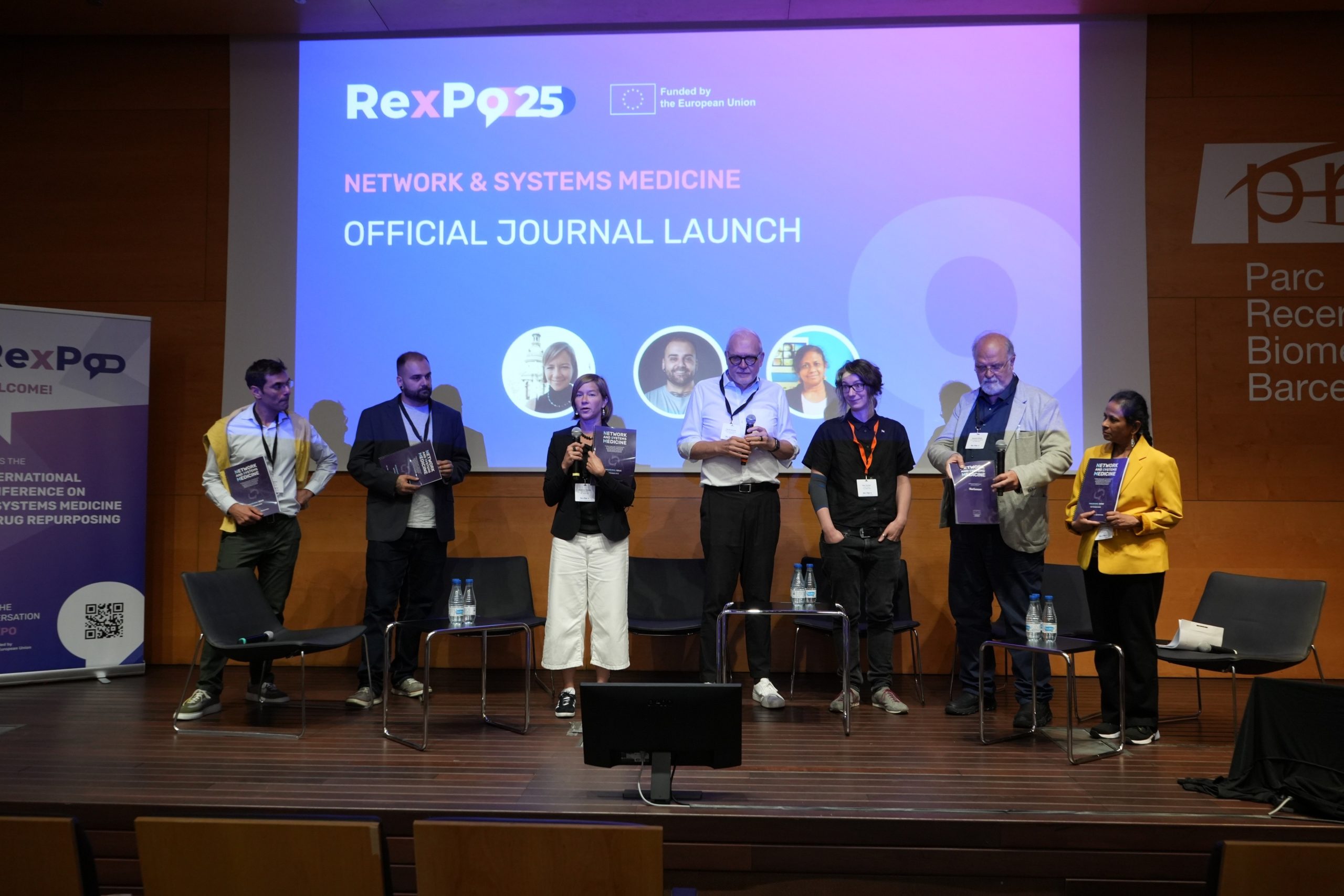
RExPO25: The 4th International Conference on Systems Medicine, AI & Drug Repurposing
On 24-26 September 2025, representatives from the entire drug repurposing ecosystem gathered in Barcelona for RExPO25, the fourth edition of the international series of conferences organised and hosted by REPO4EU.
Under the premise of being at the heart of latent discussions shaping the future of medicine, this year’s conference brought together leading voices from academia, industry, policy, HTA bodies and patient-focused organisations to explore how systems medicine, artificial intelligence and innovative regulatory and reimbursement approaches can accelerate drug repurposing for the benefit of patients across Europe.
Building on the momentum of previous editions, RExPO offered once again a truly interdisciplinary programme, reflecting on how far the field has matured and how close repurposing is to delivering real-world clinical and societal impact, according to RExPO25 Co-chairs Harald Schmidt, Head of Pharmacology at Maastricht University and REPO4EU Coordinator, and Emrey Guney, CTO and Head of Discovery & Data Science at STALICLA.
“Over the years organising this conference, we have learned a lot about the challenges, the use cases and the stakeholders involved. We are now entering a phase where we see validations, specifically in cancer and Alzheimer’s trials, and the focus is increasingly on precision and clinical proof. This year, we really tried to cover all of this in a broad and interdisciplinary manner,” explained Prof. Schmidt.
From computational discovery to clinical validation
The RExPO25 agenda spanned the full drug repurposing pipeline, from advanced computational methodologies and systems biology approaches, to clinical validation and implementation.
Over 60 international speakers, spread across 15 sessions, delivered talks highlighting how AI-driven modelling, multi-omics integration and network-based approaches are enabling researchers to identify new therapeutic indications for diseases that have yet to find a viable cure – one that targets the root cause, and not merely treats its symptoms.
Several speakers emphasised that the field is now moving beyond proof-of-concept towards tangible clinical evidence, but also stressed the importance of maintaining robust, trustworthy frameworks when applying AI in biomedicine.
“We are living in an incredible moment where many developments are crystallising into reality. The computational capacity in Europe is growing, and artificial intelligence is at the centre of this, but we must keep an equilibrium — with trusted frameworks, scientific rigour and an understanding of real clinical constraints,” said Alfonso Valencia, Director of the Life Sciences department at Barcelona Supercomputing Center.
“We need drugs to treat diseases, but developing drugs is a complex challenge. This is where the idea of repositioning drugs from one indication to another is extremely powerful, but if we want to do this in a more effective way, we still need more knowledge,” added Prof. Valencia during his RExPO25 Honorary Lecture.
Regulation, reimbursement and access: confronting the real hurdles
Beyond scientific and technological advances, RExPO25 placed strong emphasis on the role of regulation, health technology assessment (HTA), reimbursement and market access — which are deemed amongst the community as some of the biggest hurdles for bringing repurposed medicines to patients.
Some of the experts representing payers and HTA bodies brought critical perspectives to the conversation. For instance, Sibylle Reichert, Executive Director at International Association of Mutuals (AIM), reinforced the fact that protecting universal access to healthcare is crucial in Europe, which means medicines must remain affordable, accessible and available. “That’s why reimbursement organisations are such important players in this space,” she said.
Following this thread, the discussions underscored that science, regulation and reimbursement cannot be treated as separate worlds, as Anja Schiel, Senior Advisor at Norwegian Medicinal Products Agency (NOMA), put it: “You cannot disconnect science from reimbursement decisions. Repurposing is a no‑brainer when it comes to savings and equity, but collaboration and knowledge transfer across stakeholders is essential.”
Also reflecting on the need to balance accessibility with incentives for innovation, Lynn Durham, CEO and Founder of STALICLA, highlighted that researchers operating in this space believe in the common good, but they operate in a system that is strongly tied to regulation and private investment.
“That’s why we need to strike a balance between accessible pricing and acceptable returns, so that drug repurposing can be sustainable,” Durham added.
Looking ahead — together
A recurring theme throughout RExPO25 was the need for systems-level thinking and collective innovation. Speakers repeatedly highlighted that no single discipline, sector or stakeholder can advance drug repurposing alone. This collaborative spirit was reflected not only in the programme but also in the openness of discussions across collectives that have traditionally worked in silos.
As the fourth edition of RExPO concluded, one message was clear: drug repurposing is no longer a niche concept, but a powerful and increasingly validated strategy to address unmet medical needs more efficiently. The challenge now lies in scaling these successes through coordinated scientific, regulatory and economic frameworks, built by many hands working together.
RExPO25 also reinforced the role of REPO4EU as a central platform for this dialogue, and set the stage for the next steps towards making repurposed, precision therapies accessible to patients across Europe.
About RExPO25
RExPO25, the 4th edition of our international series of conferences dedicated to Systems Medicine, Artificial Intelligence and Drug Repurposing, took place in Barcelona on 24-26 September 2025.
Revisit the conference
Curious to learn more? Watch our video compilation for RExPO25

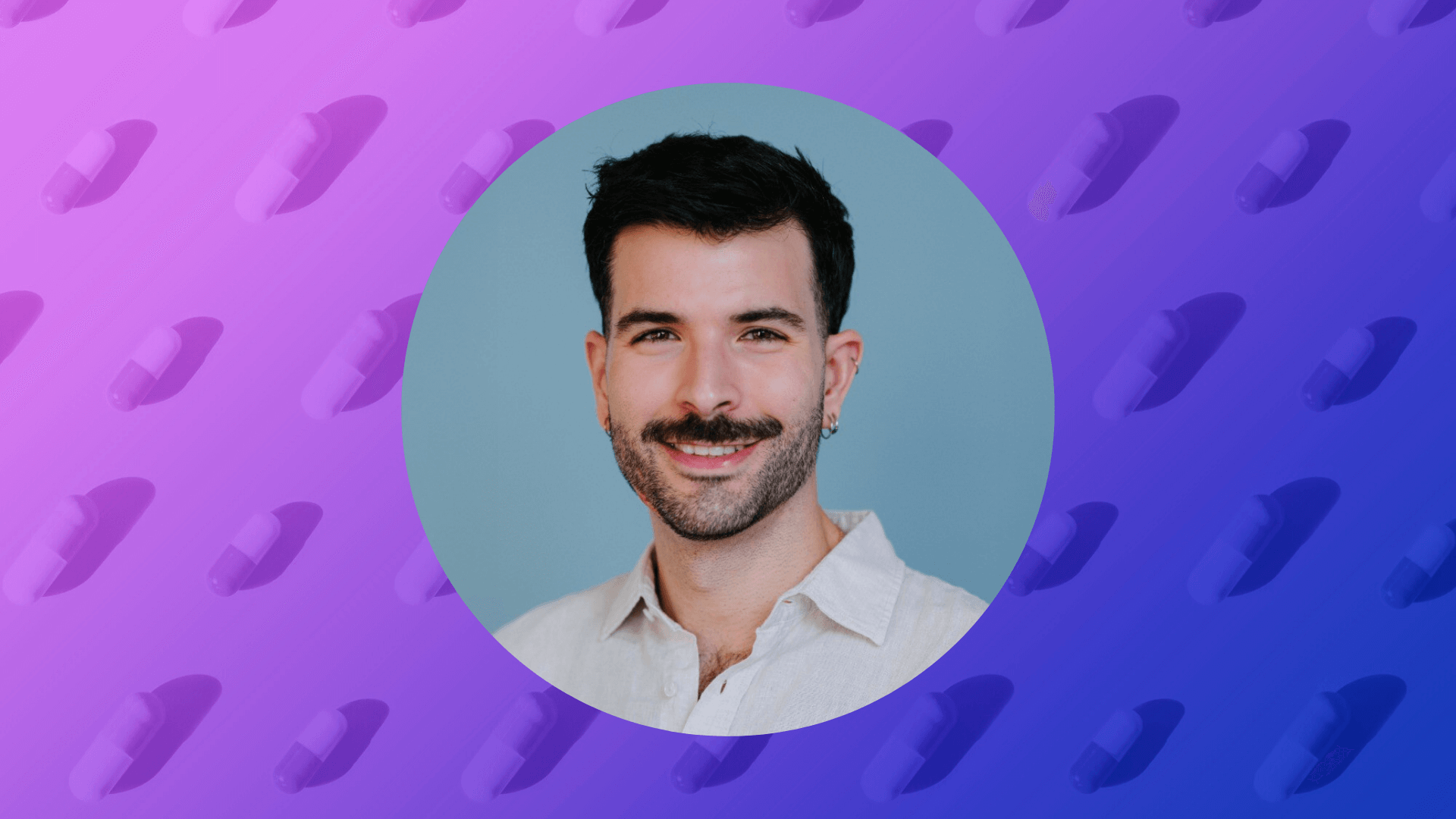
Drug Repurposing Next-Gen: Interview with Cristian Nogales (University of Vienna)
Cristian Nogales is a postdoctoral researcher at Ludwig Boltzmann Institute for Network Medicine, at University of Vienna. After pursuing studies in biochemistry and biotechnology in Spain, he completed his PhD at Maastricht University, where he eventually converged his research with the fields of systems biology, bioinformatics and drug repurposing. In this interview, he tells us about his academic journey so far and his current involvement in the REPO4EU project, where he’s investigating diagnostic and drug repurposing opportunities in the field of cardiovascular-metabolic diseases and low complexity cancers.
Science as a means to create meaningful impact
Hi Cristian! What first drew you to pursue a career in science?
I’ve always had a passion for science, even from an early age. During high school I wanted to study medicine, but at some point, I realised that it wasn’t quite the right fit for me. I still wanted to stay connected to the human and medical side of biology, though — that’s how I ended up studying biochemistry at University of Seville.
After completing my degree, I decided to continue exploring applied science and moved to Madrid for a master’s in biotechnology. I liked the idea of using science to create something tangible that could eventually help people, which set me on the path I’m still following today.
You later pursued a PhD at Maastricht University. What made you choose the academic path?
It’s actually funny because my first thought was that I didn’t want to go into academia! I wasn’t one of those people who always dreamed of doing a PhD, but an opportunity came up at Maastricht University and I decided to take it to see how I felt about research.
I quickly realised that I really enjoyed the freedom and creativity that come with academia. It allows you to explore ideas, collaborate with people from different fields and build something meaningful. So even though it wasn’t my initial plan, I’m very happy with where it led me.
What was the focus of your research for your doctorate?
I joined Maastricht University just as they were starting REPO-TRIAL, the project that later laid the foundation for REPO4EU. My research focused on cardiovascular diseases (mainly stroke and heart failure) and how to identify the molecular mechanisms that cause them.
By understanding these mechanisms, we can develop new ways to diagnose and treat patients. Over time, I became particularly interested in diagnostics, figuring out how to distinguish between patients who may have the same symptoms but different underlying biological causes. That’s key to delivering more personalised treatments.
The power behind drug repurposing
Did you know much about drug repurposing before joining these projects?
I had heard about drug repurposing during my studies in Madrid, but I didn’t fully appreciate its potential at the time. Back then, I associated it mainly with business strategies — for example, companies extending patents — rather than with its clinical and humanitarian benefits.
But once I started working on REPO-TRIAL, I understood its real value. Drug repurposing allows treatments to reach patients much faster because the drugs have already been approved for safety. If we can match an existing drug to a new disease mechanism, we can skip years of testing and immediately start improving people’s lives. That’s incredibly powerful.
You have a background in both biology and computational work. How does that shape your contribution to REPO4EU’s mission?
I think my hybrid background really helps. I come from a biological and biotechnological foundation, but I’ve always been drawn to the computational side. During both my bachelor’s and master’s theses, I worked in bioinformatics-related projects, learning to use computational tools to interpret biological data.
Now, in REPO4EU, I see myself as a bridge between two worlds — the biologists and clinicians on one side, and the bioinformaticians and data scientists on the other. These groups sometimes speak different “languages,” and I enjoy helping them understand each other’s perspectives and needs. That’s essential in a project as interdisciplinary as this one.
My work now focuses mainly on the computational aspects of the project, particularly helping to develop the REPO4EU Platform together with my colleague Chloe Bucheron. I also support the team when biological questions arise, drawing from my experience to connect the data side with the biological context.
Advice for young scientists and future researchers
They say the life of a researcher often comes with challenges. What keeps you motivated?
For me, it’s about seeing the real-world impact of what we do. Research can be difficult and full of obstacles, but when you know your work could eventually help patients, it becomes worth it.
That sense of purpose, combined with the fact that I genuinely enjoy what I do, keeps me going. It doesn’t feel like a struggle when you love the process and know it’s contributing to something meaningful.
From what you’ve experienced in your journey so far, what advice would you give to someone thinking of pursuing a PhD or a career in science?
I’d say: take it easy. Academia is fascinating, but it can also be overwhelming at times. It’s important not to put too much pressure on yourself. Go step by step, learn as you go, and try to enjoy the process.
There will be challenges, of course, but if you stay curious and passionate about your work, it’s an incredibly rewarding path. So, basically, enjoy the ride!
REPO4EU: The Podcast
Our podcast brings listeners closer to the latest innovations, research and developments happening in drug repurposing across the globe. The first season, ‘Drug Repurposing Next-Gen’, spotlights the work of PhD researchers, post-docs and young investigators involved in REPO4EU, exploring their role in the project as well as their career journeys. New episodes will be released monthly. Stay tuned for the next one!
