

Core insights - Transforming drug repurposing through real-world data-driven Artificial Intelligence
Welcome to REPO4EU: Core insights
Our brand new article series where we bring you closer to our project's core innovations and results.
What is real-world data-driven Artificial Intelligence?
A brief introduction
Artificial Intelligence (AI) has undeniably emerged as the definitive revolution of our era, fundamentally reshaping the global landscape by collapsing the distance between human intent and execution. Within the REPO4EU project, AI is far more than a buzzword; it represents a profound paradigm shift. By synergizing AI with systems biology and network pharmacology, we aim to move beyond symptom-based treatments to redefine diseases through mechanism-based endotypes, generating robust, data-driven hypotheses for drug repurposing.
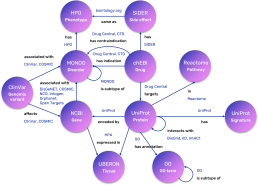
The complexity of this field requires the seamless integration of vast, heterogeneous data: from drug targets’ information, signaling pathways and protein-protein interactions to gene-disease associations, gene expression, and adverse drug effects. Consequently, REPO4EU is developing a comprehensive knowledge base aiming to bring these diverse data sources together into a harmonized, interoperable framework that supports downstream analyses and decision-making. This framework serves as the foundation for uncovering the molecular mechanisms of diseases and identifying promising drug targets and compounds for repurposing. These hypotheses are further refined through advanced in- silico workflows and subsequently validated in pre-clinical and clinical studies.
The road so far
Towards a robust repurposing framework powered by AI
A key achievement of the REPO4EU project is the expansion of the NeDRex database, which serves as our foundational knowledge base and is an integral part of the REPO4EU platform. This extensive, continuously updated resource provides the structural backbone for downstream analyses. To ensure our framework remains at the cutting edge of computational drug repurposing, we carried out an extensive literature collection, review, and categorization, now maintained and expanded through automated search queries and specialized AI-driven tools.
Building upon this data-rich foundation, we have developed a sophisticated suite of computational workflows and software tools, which includes:
- A fully automated pipeline for disease module inference and drug repurposing hypothesis generation.
- A dedicated chemoinformatics pipeline.
- A tool for selecting high-confidence, disease-associated gene sets
- A drug repurposing tool leveraging Graph Neural Networks (GNNs), as well as a web-based application for refining and exploring putative disease mechanisms.
Collectively, these advancements empower a continuous cycle of discovery, enabling the generation of high-precision drug repurposing hypotheses that are systematically refined and validated through a rigorous integration of computational and experimental evidence.

Looking ahead
Envisioning new industry standards
As we move forward, REPO4EU remains committed to a vision where AI and bioinformatics are not merely experimental additions but foundational pillars of the drug development pipeline. Our ultimate goal is to embed these technologies into the industry standard, enabling the identification and validation of mechanism-based, patient-tailored therapies with unprecedented speed and accuracy.
However, the path to a standardized model is defined by its challenges as much as its opportunities. Mechanistic drug repurposing is inherently complex, requiring a sophisticated interdisciplinary blend of expertise, advanced computational methods, and access to high-quality, diverse datasets. To generate meaningful in-silico hypotheses, we must maintain access to high-quality, diverse, and harmonized datasets —a task made more difficult by the fact that disease mechanisms and patient responses are highly idiosyncratic. Furthermore, the rapid evolution of the AI field demands constant iteration and requires constant adaptation of our tools and methods. Critically, while AI acts as a powerful catalyst for discovery, it should not become a replacement for human expertise, but a collaborative tool that augments the researcher’s ability to navigate the biological maze instead.
To overcome the challenges and stay true to our vision, we must and will continue refining our tools and workflows and foster collaboration across disciplines, to ensure that precision drug repurposing evolves from a specialized research effort into a routine, life-saving component of global clinical innovation.
Behind the scenes
Meet our Experts’ team
A multidisciplinary powerhouse of academic, clinical, and industry partners (STALICLA, University of Hamburg, University of Vienna, Brigham and Women’s Hospital, Technical University of Madrid, BioLizard, Maastricht University, Radboud University Medical Center, University of Zurich), led by the Technical University of Munich, contributes specialized expertise to the development of the REPO4EU AI-driven repurposing framework.
By integrating foundational data with specialized expertise in patient stratification and chemoinformatics, infectious diseases, and rare disease mechanisms, we transform fragmented information into actionable medical intelligence. This synergy is further sharpened by advanced in-silico validation and clinical endotyping, ensuring every hypothesis is grounded in real-world plausibility.
Together, we form a cohesive ecosystem dedicated to bridge computational modeling, clinical insight, and translational application towards a new life-saving era for patients.
About our platform
Discover our platform and explore its key features
Become an early tester now!
Follow the link to sign up for our platform's alpha release


Core Insights - The REPO4EU platform
Welcome to REPO4EU: Core Insights
Our brand new article series where we bring you closer to our project's core innovations and results.
The REPO4EU platform
A brief introduction
At the heart of REPO4EU lies a bold ambition: to build a cutting-edge, modular, and user-friendly digital platform that empowers researchers, clinicians, and regulators to collaboratively drive drug repurposing efforts in a structured and scalable way. Our goal is to provide the technical backbone for the entire REPO4EU ecosystem —a place where tools, data, methodologies, and collaborations converge to streamline and accelerate repurposing workflows across Europe.
The platform will not only integrate existing computational tools and data resources, but also serve as a dynamic workspace where users can conduct complex in-silico analyses, access curated scientific databases, and examine comprehensive research documentation to ensure transparency and reproducibility. An integrated matchmaking system enhances this environment by fostering interdisciplinary collaboration and connecting users with relevant expertise, tools, and data.
Built on principles of transparency, FAIR data, and cross-disciplinary usability, the REPO4EU platform aims to redefine how repurposing research is conducted and transformed into actionable insights.

The road so far
A quick walk through the development journey
The requirement-gathering phase for the platform was successfully completed last summer, providing us with a clear and validated understanding of user needs. These initial insights have shaped the ongoing technical implementation and ensured the platform is built around actual use cases.
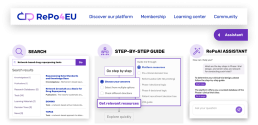
The focus so far has been on the development of the platform’s core components that will support long-term functionality and scalability. This includes the implementation of a robust backend architecture, a flexible Content Management System (CMS), an interactive decision tree engine component to support guided user workflows, a curated database module for structured resource management, and the foundation for a platform assistant to support user navigation.
The most immediate challenge now is ensuring the platform can adapt to the wide variety of tools, datasets, and user needs; each with different technical expectations and degrees of complexity. Unlocking compliance, scalability, and performance without compromising security, and balancing flexibility with usability is a constant priority. On top of this, rapid developments in AI and data privacy require careful technical and ethical considerations as we implement features like AI-powered assistance or advanced analytics.

Looking ahead
The driving force - Putting together the pieces of the drug repurposing puzzle
The strong interdisciplinary nature of REPO4EU remains our strongest motivation. Collaborating with experts in regulatory science, pharmacology, bioinformatics, and clinical practice has been energizing, and it keeps our focus grounded in real impact. After all, our biggest hope is to create a platform that doesn’t just serve today’s needs, but is able to grow into a sustainable digital infrastructure for drug repurposing across Europe and beyond.
The opportunity to see the platform evolve into a truly user-centric, interoperable ecosystem that enables researchers, clinicians, and decision-makers to collaborate and innovate more efficiently in the field of drug repurposing is what excites us the most moving forward. With so many diverse tools and resources being integrated, and the emergence of new technologies like AI-driven assistants, we see REPO4EU becoming a key enabler for next-generation, evidence-based medicine.
We believe that bringing complex workflows, such as in-silico modeling, sustained by a solid research collection and a navigable network of drug repurposing prior art into a unified interface that doesn’t overwhelm users but instead guides them through well-structured, meaningful paths could genuinely lower the barrier to entry for impactful research and accelerate the path from idea to implementation, especially in the drug repurposing realm.
The recent momentum in generative AI has also opened exciting new directions. To better support users navigating these repurposing workflows, we are now developing an AI Assistant Chatbot. This assistant will help users find the right tools, resources, and data based on natural language queries, significantly improving user experience, accessibility and encouraging meaningful engagement.
At the same time, we are aware of the massive challenge of stitching all these components together in a way that’s both technically robust and intuitive to use. Ensuring scalability, long-term maintainability, and data governance compliance while staying agile and user-driven is a constant balancing act. After all, we understand that successful adoption hinges not only on specific features but on clarity, performance, and trust — all factors that require continuous fine-tuning and community feedback.
Behind the scenes
Meet our development team
The platform development team, led by Egnosis, is responsible for the overall design, technical development, and iterative rollout of the platform. Their expertise lies in systems integration, data architecture, workflow design, and user-centered software engineering. They act as both developers and facilitators, and transform scientific needs into working, scalable tools.
Key contributors to this effort include experts in cloud-based infrastructure, data modelling, secure user access, and research software engineering. The development team works hand-in-hand with REPO4EU partners across the whole consortium to ensure the platform not only meets technical requirements but also aligns with the practical workflows of its users.
About our platform
Discover our platform and explore its key features
Become an early tester now!
Follow the link to sign up for our platform's alpha release

REPO4EU researchers launch SMART, the tool that simplifies decision models for healthcare innovation
Decision-analytic models play a vital role in healthcare, helping researchers, policymakers, and clinicians evaluate the cost-effectiveness and value of new interventions. Yet, building these models can be complex, especially in early-stage research or data-limited contexts such as drug repurposing or rare diseases.
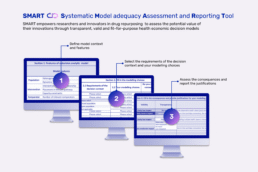
To address this challenge, researchers in the REPO4EU consortium have developed SMART, a structured, step-by-step tool designed to guide users through making, reporting, and justifying simplified modelling choices tailored to specific decision contexts.
Teebah Abu-Zahra, Health Economics Researcher at Maastricht UMC+, led the development of the tool alongside other colleagues involved in REPO4EU. In this interview, she explains the motivation behind SMART, how it can support innovators and decision-makers, and what role it plays in advancing drug repurposing and precision medicine.
Hi Teebah! Can you tell us, in a few words, what is SMART?
SMART is a practical tool built to guide researchers through the process of making, reporting, and justifying simplified healthcare modelling choices, in a step-by-step structured framework. It helps users understand the trade-offs between the model’s simplicity, and its transparency and validity in each model feature. Overall, SMART promotes fit-for-purpose modelling that is appropriate for the specific decision context and the constraints that come with it.
What prompted the need to create this tool?
In short, SMART was born out of the need to make decision models more accessible, more transparent, and more useful for those who need it most, especially when time and data are in short supply.
When we first started this work, our goal was to develop practical guidance for researchers who aren't health economics experts but still need to use decision-analytic models to inform important healthcare decisions.
We were thinking not only of scientists and innovators working on drug repurposing research in academic settings or SMES, but of anyone who, despite having limited time, data or technical expertise, still needs to assess the value of their healthcare innovation.
Why is this important within a healthcare innovation context?
There is currently no clear accessible guidance tailored to developing decision models in contexts such as designing an early-stage intervention, testing a repurposed drug, or working in a resource-constrained setting.
Decision-analytic models are powerful tools in health economics, used to compare healthcare interventions based on their potential cost-effectiveness. They support decisions at all stages of development, from research prioritization to pricing and reimbursement. But building these models isn’t straightforward.
As we looked through the existing literature and resources, we saw a growing gap in supporting decision models development in contexts where simplicity isn’t just a preference, but a necessity.
Think, for example, of precision mechanism-based drug repurposing, where hundreds of drug-indication pairs need to be screened for potential value, often without clinical or cost data. Or rare diseases and health system planning in low- and middle-income countries, where timelines are tight and data is sparse. In these scenarios, simple early-stage models can provide immense value, by highlighting unmet medical needs, estimating societal value and guiding early pricing discussions.
Who are the end users of SMART?
We believe SMART will be valuable to a wide range of users — from health economic decision modellers all the way to regulatory bodies, health technology assessment agencies, peer reviewers, policymakers, clinicians, and even other healthcare decision makers.
Apart from enabling reviewers and users to better assess whether a model is suitable to inform healthcare decisions, we also see value in using SMART as a training and educational tool for non-experts in health economic decision modelling, including scientists, innovators and public health professionals.
Now that it’s been officially released, we’re excited to see how SMART will be applied in real-world settings to support more transparent, efficient and fit-for-purpose modelling.
How has it been received by the healthcare community so far? Have you had any feedback from peers who have used the tool yet?
Yes! One of my colleagues is already using SMART in her own modelling research paper. She’s conducting an early value assessment (EVA) to evaluate the potential cost-effectiveness of seven digital technologies in addition to standard care in the United Kingdom; she said she found SMART very helpful to ensure transparent reporting and justification of the simple modelling choices.
We are also currently applying SMART in a REPO4EU pilot study involving patients with thyroid cancer. We can already see the value of our tool in guiding the development of a health economic decision model within a context of limited data and urgent need for new therapeutic options, as seen in patients with anaplastic thyroid cancer and poorly differentiated thyroid cancer.
What was your role in the development of SMART? And who else was involved in the process?
I developed SMART from its initial concept through to design and implementation, with the continuous support and guidance from Manuela Joore and Sabine Grimm, both also from Maastricht UMC+. My primary responsibilities included identifying gaps in existing health economic modelling guidance, shaping the framework and content of the tool and conducting interviews and workshops to help guide the SMART development.
The whole process also benefited from the contributions of Mirre Scholte from Radboud UMC and others from the REPO4EU consortium, including Prof. Joe Loscalzo and Adam Raymakers from Harvard Medical School. Together we identified key features of health economic decision models based on reviewing key literature, established guidelines, and our collective expertise.
To facilitate consistent use of SMART, we also developed a glossary and applied the tool in an illustrative case for planning a health economic decision model for a repurposed drug for treatment-resistant hypertension.
While the core development was conducted at KEMTA (the Clinical Epidemiology & Medical Technology Assessment at Maastricht UMC+) we also obtained extensive feedback through in-depth interviews and expert workshops with health economic decision modellers and model users, which helped us massively in refining the tool and inform key development decisions.
How will SMART contribute towards the development of the REPO4EU Platform and the overall mission of the project?
With the support of the Egnosis team, SMART will be integrated into the REPO4EU Platform to make it directly accessible to researchers and innovators engaged in drug repurposing research.
With the help of SMART, alongside other essential HTA resources on the platform, we aim to empower these researchers to develop health economic decision models to assess the value of their innovations independently and efficiently. This, in turn, promotes a more transparent and systematic approach to health economic evaluation in mechanism-based drug repurposing and precision medicine development, ultimately supporting improved decision-making and resource allocation for developing new therapeutic options that address unmet patient needs.
The SMART tool
Can we make health economic decision models as simple as possible, but not simpler?
Sounds interesting?
Follow the link to access version 1.0 of the SMART tool

REPO4EU presents DrugRepoChatter, an AI timesaver tool for drug repurposing researchers
Sifting through the vast amount of scientific literature can be overwhelming, especially in fast-evolving fields like drug repurposing, where the sheer volume of publications, databases and tools available can pose a significant challenge for researchers trying to stay up to date with all the latest releases.
In a bid to tackle this problem, experts from the REPO4EU Consortium have joined forces to develop DrugRepoChatter, an AI-powered tool that helps researchers navigate through the relevant literature for mechanism-based drug repurposing in a faster and more efficient way.
Dr. Fernando M. Delgado Chaves, Research Group Leader at University of Hamburg’s Institute for Computational Systems Biology (CoSyBio), spearheaded the development of the tool, working alongside REPO4EU partners from other institutions to bring it to fruition. Drawing from his expertise in bioinformatics and generative AI, he explains in this interview his approach to the design and the methodology he adopted to create DrugRepoChatter, offering an up-close view on how it works and its capabilities.
Hi Fernando! Congratulations for the successful launch of DrugRepoChatter.
What prompted the need to create this tool?
Honestly, it's the sheer explosion of scientific papers out there! Keeping up, especially in a field that's moving as fast as drug repurposing, is just… insane. As researchers ourselves, we were constantly drowning in papers, trying to find the right tools, methods, and insights. It felt like there was so much great knowledge, but it was all scattered and hard to access efficiently.
That's the real problem DrugRepoChatter solves. We wanted to build something that acts like your personal expert assistant, helping you cut through the noise and find the crucial information fast. Think of it as taking all that scattered knowledge and putting it into one place, making it super easy to get to what you need. No more endless PDF wading! You ask a question, and boom, you get answers grounded in solid, curated literature.
How do you envision researchers using it? Can you think of a specific scenario of when they would be accessing it?
Picture this: you're a researcher, maybe a bioinformatician or data analyst, and you're knee-deep in a drug repurposing project. You've got this awesome dataset, and you're wondering, "What computational tools are actually good for this kind of data?" Instead of spending days Googling and digging through papers, you just hop onto DrugRepoChatter and ask, "What are the best AI tools for analyzing transcriptomics data in drug repurposing?" Within seconds, the chatbot gives you expert-selected articles that break down the best methods, compare them, and even link you to the databases you need. It's like getting instant, expert advice.
Or, imagine you're a clinician or biomedical researcher. You've got unique patient data and you're trying to figure out the right analysis techniques. Instead of getting lost in literature reviews, you ask DrugRepoChatter,“Which databases can I use to find validated clinical biomarker discovery in neurodegenerative diseases?” And bam! You get curated insights, pointing you to the best approaches backed by solid research. It’s purely about making research faster and smarter.
What degree of knowledge do researchers need to have about AI tools? Do they need prior experience using other similar platforms?
Zero, nada! Honestly, we made DrugRepoChatter super simple on purpose. You absolutely do not need to be an AI guru or have used chatbots before. If you can type a question, then you can use DrugRepoChatter – it’s as simple as that. Whether you're a seasoned pro or just starting out, we wanted to make sure this tool is accessible to everyone.
The database contains 285 open-access articles, which have been selected by experts from the REPO4EU.
Who was involved, and what was the selection criteria?
It has been a joint effort, with many colleagues from across the whole REPO4EU Consortium involved.
We had experts from all over Europe – University of Hamburg (UHAM), Technical University of Munich (TUM), GeneSurge, STALICLA, University of Vienna (UNIVIE), Brigham and Women’s Hospital (BWH), Maastricht University (UM), even Concentris! It was a big group effort.
And the selection criteria were pretty rigorous. We used a structured annotation process in Paperpile, where 13 of us from six different institutions collaboratively labeled publications. We categorized reviews by focus – clinical, computational, tools. Databases had to be usable, either downloadable or via an Application Programming Interface (API). Methods and tools were classified by strategy, technique, and usability – code, package, graphical user interface, API.
Basically, we wanted things that were actually useful for REPO4EU’s work, especially our tasks in WP2 on real-world data-driven AI in drug repurposing. And of course, they had to be either highly cited – 30+ PubMed citations – or very recent, published in the last 5 years.
I want to take this opportunity to mention some of the key people involved in the curation: Markus List, Quirin Manz, Judith Bernett and Johannes Kersting from TUM; Michael Hartung, Andreas Maier, Olga Tsoy and myself from UHAM; Emre Guney, Montserrat Puiggròs and Francesco Sirci at STALICLA; Julia Guthrie from UNIVIE; Ruisheng Wang at BWH; Robert Löwe from GeneSurge; Hermann Mucke from HMPC; and Harald Schmidt from UM.
As a bioinformatician, what was your role in this whole process?
I spearheaded the development, really making sure DrugRepoChatter brought together cutting-edge AI with a user-friendly design for researchers from all sorts of backgrounds. I’m personally fascinated by large language models (LLMs), and I quickly realized they were a game-changer for how we access scientific info. Think about the time we’re saving researchers by using AI!
I worked closely with computational biologists, clinicians, data scientists within REPO4EU. Collaborators like Lisa Marie Spindler, Farzaneh Firoozbakht and Andreas Maier were key in building the backend, while our clinical partners helped us make sure it was really useful from a translational perspective. It was truly interdisciplinary, which is what makes this project so special.
Now that DrugRepoChatter has gone live, how has it been received by the research community so far?
Have you had any feedback from researchers who have used it?
We know many researchers have accessed it already and are actively using it, which has been really encouraging! The response is mostly about how much time DrugRepoChatter saves on literature searches – that's a big win. This feedback is gold for us because it helps us keep improving the tool, making sure it really meets the needs of the community. We’re still refining it based on what users are telling us, but yeah, overall the initial response has been great!
You mentioned earlier you wanted to make this tool accessible to everyone.
Why was this an important element in the conception of DrugRepoChatter?
We wanted to go a step further than just open access. We aimed to make this knowledge even more accessible by building tools that make it easy to find and use. And let's be clear: DrugRepoChatter, and tools like it, are completely dependent on open access science. Imagine trying to build this chatbot with articles locked behind paywalls – it's impossible! The chatbot needs to read the articles, to understand them, to answer questions based on them. That's why open science isn't just important for researchers; it's fundamental to creating the very technology that can democratize scientific knowledge and accelerate progress.
DrugRepoChatter
Discover our Drug Repurposing Chatting Expert and start a conversation
Want to learn more?
Read the research article 'DrugRepoChatter: A Drug Repurposing Expert Chatbot Curated by the REPO4EU Consortium’ on ScienceOpen

Ethics and privacy-by-design - why these are no buzzwords in REPO4EU
Over the years, those working in research ethics have sometimes felt that the ELSI (Ethical, Legal, and Social Implications) work packages or the ethics-by-design approach can seem like mere cosmetic additions to a research project to please the EU framework calls. Rather than being integrated into the research design and implementation core, they were sometimes reduced to token gestures instead of meaningful contributions to the ethical and privacy-friendly conduct of research. But shifting from being a “superficial” adornment to a truly committed approach is quite a challenge.
At REPO4EU, we are fully aligned with the ethics and privacy–by–design approach. This has enhanced the ethical and legal robustness of our projects and fostered a culture of ethical and privacy awareness and responsibility within the consortium. Ethics and privacy– by– design are not just theoretical concepts for the whole team but are practical guides that shape their research practices and decisions. This alignment underscores the team’s dedication to conducting research that respects the rights and interests of all stakeholders –especially those of research subjects– and contributes positively to society. It’s a testament to the team’s commitment to “not just doing things right but also doing the right things“.
Ethics and privacy by design are fundamental approaches that guide the conduct of responsible, lawful, and impactful research. Its challenges highlight the need for careful planning, open communication, and ongoing collaboration among all stakeholders involved in a research project. In REPO4EU, the ethics and privacy by design approach is seriously implemented. Ethics and privacy by design are, hence, no buzzwords for us.